

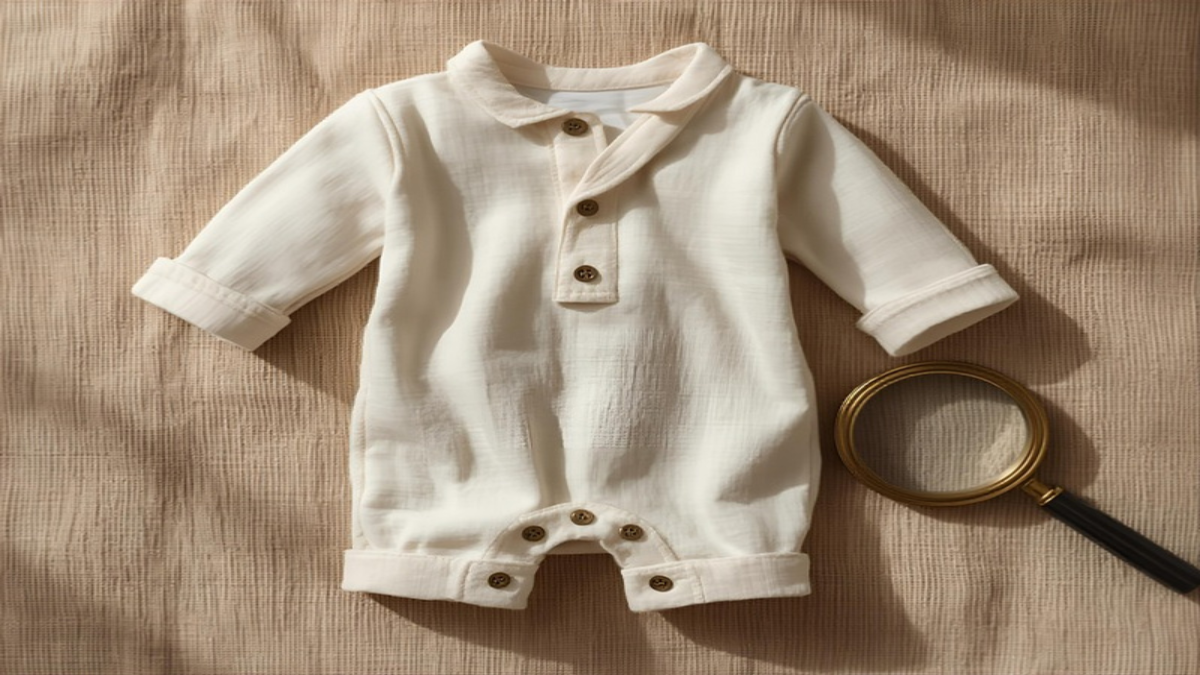
Why Cheap Baby Clothes Fall Apart (And the 7 Quality Signals That Actually Matter)
Why Cheap Baby Clothes Fall Apart (And the 7 Quality Signals That Actually Matter)
The short answer: cheap baby clothes are engineered to a price, not a standard. The three primary cost-reduction levers are fabric weight (thinner cotton costs less to produce), synthetic blending (polyester is significantly cheaper than cotton), and construction shortcuts: glued rather than sewn seams, plastic snaps that fail on first use, and overlocked edges that fray within weeks. The result looks fine at shelf. It does not survive the laundry.
There is also a growing problem with knockoff products: garments that copy the silhouette of premium baby clothing brands at a fraction of the cost, sold primarily on Amazon and similar platforms. The external appearance can be nearly identical. What changes is everything you cannot see until wash three.
One Ashmi & Co. customer on Nordstrom described the experience directly: "I tried the knockoffs and they completely fell apart after one wash. I've bought about 10 items from Ashmi now."
This guide covers the seven signals that separate baby clothing that lasts from clothing that does not, so you can make the call before you buy, not after three rounds of laundry.
Key Takeaways
- Cheap baby clothing fails through three main mechanisms: thin fabric, synthetic blending, and construction shortcuts.
- Seven quality signals can be assessed before purchase, most by feel and a close look at the inside of the garment.
- Cost-per-wear math consistently favors quality for pieces worn multiple times per week.
- OEKO-TEX Standard 100 certification tests for over 1,000 harmful substances and is a reliable third-party quality indicator.
- Knockoff garments copy silhouette but use thinner fabrics and weaker construction; the difference appears on first wash.
- Not everything needs to be premium: prioritize fabric quality for bodysuits, rompers, and pieces worn closest to skin most often.
- A simple five-wash test tells you everything about a brand's quality standards before you buy more.
The Real Cost of Cheap Baby Clothes
Cost-Per-Wear Math
The sticker price of baby clothing is a poor proxy for its actual cost. What matters is cost per wear, and for clothing washed multiple times a week, that math resolves quickly.
Consider: a $15 fast fashion bodysuit that lasts 10 washes before pilling and fading costs $1.50 per wear. A $52 Ashmi bodysuit worn 80 times across two children (a conservative estimate for a well-maintained piece) costs $0.65 per wear. The more expensive piece is less than half the cost when you account for the full lifecycle.
That calculation only grows more favorable when you factor in replacement cost. The parent buying $15 bodysuits is buying them repeatedly. The parent buying once is not.
The Hand-Me-Down Premium
Quality baby clothing holds resale value. Premium baby brands sell consistently on Poshmark, ThredUp, and eBay at 40–60% of retail, sometimes more for discontinued styles. Secondhand market analyses consistently show that well-maintained pieces from recognized brands retain meaningful value. Fast fashion baby clothing has essentially no secondary market value.
For a family planning two or three children, quality baby clothing is closer to durable goods than consumables. It gets worn, washed, handed down, and sometimes sold. The $52 bodysuit that ends up in your second child's drawer and then sells for $20 on Poshmark has a net cost far below its purchase price.
The Replacement Cycle
Cheap clothing requires frequent replacement, not because the child outgrew it, but because it deteriorated. Parents who track this report spending more total on low-quality clothing over a child's first two years than parents who bought quality from the start. The savings at shelf are real; the savings over time are not.
"Wash after wash, it has stayed amazing. Totally worth it." — Ashmi & Co. customer
The 7 Quality Signals That Actually Matter
Not sure what size to buy?
Get our free size guide — the cheat sheet every gift buyer and new parent needs.
These seven signals can be assessed before purchase, most by feel and a close look inside the garment. No lab required.
| # | Signal | What Good Looks Like | What to Avoid |
|---|---|---|---|
| 1 | Fabric Weight | Heavyweight knit cotton that feels substantial in hand; drapes with body; does not stretch out of shape when pulled | Thin single-jersey that feels flimsy, stretches easily, or is slightly see-through when held to light |
| 2 | Fabric Composition | 100% cotton or 100% linen on the label. OEKO-TEX or GOTS certification is a further confirmation. | "95% cotton, 5% elastane" on non-stretch pieces; polyester blends; "ultra-soft" synthetic blends with no certification |
| 3 | Colorfastness | Colors hold true after first wash; no transfer to other items in laundry; no significant fading after five washes | Color bleeding onto other clothes or the baby's skin; noticeably faded appearance after two or three washes. Test: wet a white cloth and rub the garment — any color transfer is a warning sign. |
| 4 | Construction | Flat-felled seams on the inside with no raw edges; stitching is consistent and tight; hem lies flat without bunching | Overlocked-only seams that can fray and create rough edges against sensitive skin; uneven stitching; loose threads at hem or collar |
| 5 | Snaps and Closures | Solid metal snaps that click firmly and stay closed during active wear and diaper changes; buttons with tight, reinforced thread attachment | Plastic snaps that pop open with minor pressure; loose buttons that catch on other laundry; KAM-style snaps that break at the attachment point within weeks |
| 6 | Wash Performance | Shape, softness, and color should hold through 20+ washes. Check at wash 5: no pilling, no significant shrinkage, no fading. | Pilling beginning at wash 5–10 (typical of low-weight polyester blends); shrinkage beyond the pre-shrunk standard; color that looks noticeably different from the original within a month of regular washing |
| 7 | Label Quality | Soft printed label directly on the fabric, or woven label with folded edges; sits flat against skin without irritation | Scratchy heat-transfer labels that peel at the edges after a few washes; stiff woven labels that irritate sensitive skin and must be cut out |
The label inside the garment is often the fastest tell. A brand that cuts corners on the label is cutting corners everywhere else. A brand that takes the time to get the label right (soft, flat, permanently affixed) is usually taking the time to get everything else right too.
"Thick, versatile and cozy." — Ashmi & Co. customer
The Knockoff Problem
The knockoff market for baby clothing has grown significantly alongside the rise of premium baby brands. It works like this: a manufacturer copies the external silhouette (the ruffle collar, the smocked bodice, the contrast trim) but sources fabric at a fraction of the cost and omits the construction details that make the original worth its price.
The external appearance can be nearly identical. On a product listing photograph, it can be impossible to tell the difference. The difference appears on first wash.
Knockoff baby clothing typically uses:
- Lighter-weight cotton or cotton-polyester blends: the fabric feels different in hand and pills quickly under heat and friction
- Cheaper snap hardware — plastic rather than metal, or KAM snaps rather than solid-press snaps
- Overlocked-only interior seams — visible as a looping thread edge on the inside of the garment, rather than the flat seam of a better-constructed piece
- Reactive dyes without colorfastness treatment — the color looks correct at purchase and fades quickly under repeated washing
How to protect yourself: check the fabric weight in hand before purchasing. Look for OEKO-TEX Standard 100 certification, which tests for over 1,000 harmful substances and cannot be faked on a knockoff. Check for metal versus plastic snaps. And read reviews specifically for wash performance, not just initial impressions.
"I tried the knockoffs and they completely fell apart after one wash. I've bought about 10 items from Ashmi now." — Ashmi & Co. customer
This is not an isolated experience. It is the consistent result of a fabric and construction gap that looks invisible until the first laundry cycle.
A Simple Wash Test Protocol
Before investing in a full wardrobe from any brand — including ours — run a single piece through a wash test. Here is a protocol that tells you what you need to know within five washes:
First Wash
- Cold water, gentle cycle
- Tumble dry low (or hang dry if you prefer — but test with tumble dry, since most parents do not hang dry every bodysuit)
- Check immediately after drying: Did it shrink? Did the color bleed? Is there any pilling on high-friction areas (underarms, bottom snaps)?
Second Through Fifth Wash
- Repeat. Same settings.
- After wash five, check: Has the color faded noticeably from purchase? Has the fabric lost its shape or softness? Are there pills forming? Have the snaps held?
By wash five, you know what you have. A premium cotton piece at wash five looks essentially like it did at purchase. A low-quality piece at wash five looks like it has lived a much longer life.
One Ashmi & Co. customer captured this directly: "I've washed and tumble dried it many times. Still in good shape." Another: "Wash after wash, it has stayed amazing. Totally worth it."
What to look for in a brand that will pass this test:
- OEKO-TEX Standard 100 certification: independent verification that the fabric is free of harmful substances and processed to a consistent standard
- Transparent country of manufacture — brands willing to share where their garments are made are generally more confident in their quality standards
- Wash care instructions that match the fabric — a brand recommending cold/gentle for 100% cotton is being honest; a brand recommending hand wash only for a baby bodysuit is signaling fragility
When Expensive Is Worth It — and When It Is Not
Not everything in a baby's wardrobe needs to be premium. Here is an honest framework for where quality investment pays off and where it does not.
Worth the Investment
- Bodysuits and onesies: worn daily, washed constantly, in direct contact with sensitive skin at all times. This is where fabric weight and composition matter most. Cotton absorbs moisture approximately 27 times its weight, which matters for a baby's comfort through the day. Synthetic blends cannot match this.
- Occasion pieces — items worn for milestone photos, family gatherings, and events that will be photographed. These pieces hold resale value and often become keepsakes.
- Anything you intend to hand down — if a second child will wear it, the cost-per-wear math across both children almost always justifies premium fabric.
- Rompers and everyday sets — worn multiple times per week, washed frequently, and in direct contact with skin during sleep and play.
Less Critical
- Socks — lost constantly, worn briefly, and cheap to replace. Not worth premium spending.
- Bibs — used heavily and briefly; functional items where performance matters more than longevity.
- Outerwear worn fewer than 20 times — seasonal jackets and snow suits are often worn so infrequently that the cost-per-wear calculation shifts.
- Swim and beach wear — UV and chlorine resistance matter here more than cotton quality.
The honest principle: prioritize quality for everything that touches sensitive skin for extended periods, especially items laundered multiple times per week. For functional accessories and rarely-worn pieces, quality matters less.
"100% cotton so of course you spend a lil extra." — Ashmi & Co. customer
That customer understood something worth naming directly: the cost of premium cotton is the cost of doing it correctly. It is not a markup on marketing. It is the price of fabric that behaves the way fabric should — washing well, wearing well, and lasting through more than one child's rotation.
You can read more about why fabric composition matters in our organic cotton guide, and see how bamboo compares in our bamboo baby clothing breakdown. For third-party verification standards, visit OEKO-TEX Standard 100.
Frequently Asked Questions
Why do cheap baby clothes shrink so much?
Cheap baby clothes shrink because they use low-quality cotton that has not been pre-shrunk or ring-spun, often combined with synthetic blends that react unpredictably to heat. Premium cotton garments from brands with quality standards are typically pre-washed or use ring-spun cotton that has already been through the shrinkage process, resulting in far more stable sizing across repeated washes. If a garment shrinks dramatically on first wash, especially before tumble drying, the fabric was poorly prepared from the start.
Are expensive baby clothes worth it?
Yes, for the pieces worn most frequently and closest to skin. The cost-per-wear math consistently favors quality: a $52 bodysuit that survives 80+ washes across two children costs less per use than a $15 bodysuit replaced after 10 washes. Premium baby clothing also holds resale value on platforms like ThredUp and Poshmark. The calculus shifts for rarely-worn items; socks, bibs, and items used fewer than 20 times do not need to be premium. But for bodysuits, rompers, and everyday clothing worn multiple times a week, quality fabric and construction save money over time.
How do I know if baby clothes are good quality?
Seven signals identify quality baby clothing: (1) Fabric weight: substantial knit cotton in hand, not thin and see-through. (2) Fabric composition: 100% cotton or linen, not mystery blends. (3) Colorfastness: no bleeding on first wash. (4) Construction: flat seams inside with no raw edges. (5) Snaps and closures: solid metal snaps that click firmly, not plastic that pops open. (6) Wash performance: shape and color hold through 20+ washes with no pilling. (7) Label quality: soft printed or woven label, not a scratchy iron-on that peels. OEKO-TEX Standard 100 certification is also a useful third-party signal.
What is the difference between cheap and premium baby clothing?
The primary differences are fabric weight and composition, construction quality, and wash durability. Cheap baby clothing uses lighter-weight cotton (or cotton-polyester blends), overlocked interior seams that can fray, plastic snaps that fail quickly, and dyes that fade or bleed after a few washes. Premium baby clothing uses heavier-weight knit cotton (or certified organic fabrics), flat interior seams that do not irritate sensitive skin, solid metal snaps, and colorfastness that holds across dozens of washes. The external silhouette of knockoff and premium pieces can look nearly identical; the difference becomes apparent the first time they are washed.
How many times should a baby bodysuit last through washing?
A quality baby bodysuit should last a minimum of 50 washes with no significant pilling, color fading, or shape loss, and a premium piece from a brand with rigorous quality standards should survive well beyond that. Many parents report Ashmi & Co. bodysuits maintaining their shape and softness through two children and 80+ washes. By contrast, low-quality polyester blends typically begin pilling between wash 5 and wash 10, and most fast fashion bodysuits show significant degradation within 20 washes.
All Ashmi & Co. clothing is made from 100% premium cotton — designed to hold up through the season of life that puts baby clothing through the most demanding wash cycles imaginable.
Every bodysuit, romper, and set in our everyday collection is built to the standard this guide describes.
%0A%0A%20%20The%20short%20answer:%20cheap%20baby%20clothes%20are%20engineered%20to%20a%20price,%20not%20a%20standard.%20The%20three%20primary%20co...)
Leave a comment
This site is protected by hCaptcha and the hCaptcha Privacy Policy and Terms of Service apply.