

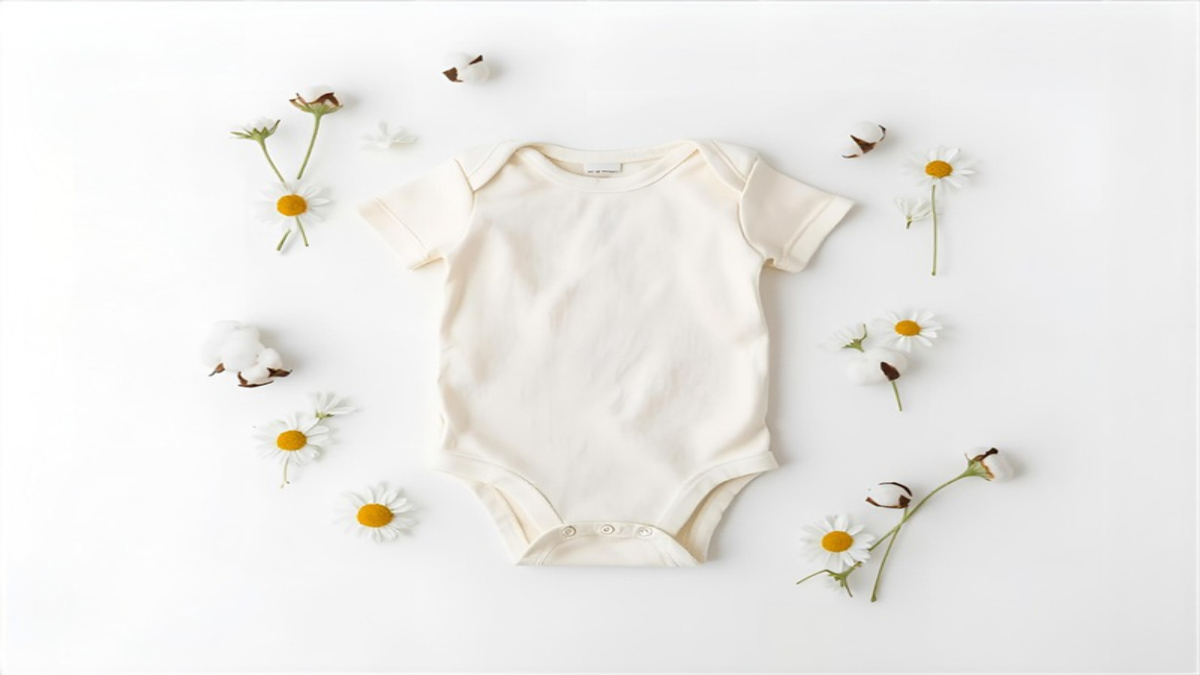
Baby Clothes for Sensitive Skin: What Parents and Pediatric Dermatologists Recommend
Baby Clothes for Sensitive Skin: What Parents and Pediatric Dermatologists Recommend
For babies with sensitive skin or eczema, the fabric question is not a preference; it is a practical one. 100% cotton, specifically tightly-woven or heavyweight knit cotton without synthetic blends or chemical finishes, is the most consistently recommended choice across pediatric dermatology guidance. It breathes, it absorbs moisture, it does not trap heat, and when certified to OEKO-TEX Standard 100, it has been tested to confirm the absence of the chemical residues most commonly associated with skin irritation. The sections below cover what makes infant skin particularly reactive, what to look for in clothing, how to wash it, and when a skin reaction in your baby warrants a call to the pediatrician.
Key Takeaways
- 100% cotton is the most widely recommended fabric for babies with sensitive skin or atopic dermatitis (eczema).
- Infant skin has a stratum corneum approximately 30% thinner than adult skin (Stamatas et al., 2010), making it more permeable to chemical irritants.
- Eczema (atopic dermatitis) affects up to 1 in 4 children in the US, making fabric choice a genuinely relevant concern for many families.
- Clothing does not cause eczema, but synthetic fabrics, rough seams, and chemical fabric finishes can trigger or worsen flares.
- OEKO-TEX Standard 100 (Product Class I) and GOTS certification are the two most meaningful certifications to look for.
- Washing with fragrance-free, dye-free detergent and skipping fabric softener makes a measurable difference for reactive skin.
Why Infant Skin Is More Vulnerable
A newborn's skin is not simply smaller adult skin. The stratum corneum (the outermost layer of skin that acts as a barrier between the body and the environment) is approximately 30% thinner in infants than in adults, according to research by Stamatas et al. (2010), and that difference is clinically meaningful. A thinner barrier means that substances in contact with the skin, including dyes, chemical finishes, detergent residue, and synthetic fibers, can penetrate more readily than they would in an adult.
Infants also have a higher surface-area-to-body-weight ratio than adults, which means that any substance absorbed through the skin reaches a higher effective concentration relative to body mass. This is why pediatric guidance on fabric, skincare, and detergent is stricter for infants than for older children; the exposure math is genuinely different.
For babies who are already predisposed to eczema, this matters even more. Atopic dermatitis is a chronic inflammatory skin condition affecting up to 1 in 4 children in the United States, according to the National Institute of Arthritis and Musculoskeletal and Skin Diseases (NIAMS). While the condition is driven by genetic and immune factors, not by any single external trigger, clothing is one of the most consistent and controllable environmental variables in an infant's daily life.
Fabric Comparison for Sensitive Skin
Not sure what size to buy?
Get our free size guide — the cheat sheet every gift buyer and new parent needs.
Not all soft-feeling fabrics are equally well-suited for reactive skin. Here is how the most common baby clothing fabrics compare on the dimensions that matter most for sensitive-skin infants.
| Criteria | 100% Cotton | Bamboo Viscose | Polyester | Wool |
|---|---|---|---|---|
| Skin safety | Excellent — long clinical track record | Variable — depends on processing and certification | Poor — known irritant for reactive skin | Poor for infants — fiber scale structure can irritate |
| Breathability | Excellent | Good | Poor — traps heat and moisture | Good breathability, poor initial contact comfort |
| Eczema risk (contact) | Low | Low to moderate (varies by processing) | Moderate to high | High — commonly listed as irritant in eczema literature |
| Pediatrician recommendation | Yes — consistently recommended | Sometimes — with certification caveats | No | Generally no for infants with eczema |
| Cost (baby clothing) | $18–$80 depending on weight and brand | $20–$75 | $5–$25 | $40–$120 |
What the Research Actually Says About Cotton and Eczema
The American Academy of Pediatrics (AAP) consistently points parents of children with atopic dermatitis toward natural fibers, particularly cotton, and away from synthetic fabrics and wool. The AAP's eczema management guidance specifically recommends soft, breathable fabrics. The guidance is not that cotton cures eczema. It does not. But reducing contact irritants is part of the standard management framework, and fabric is one of the most direct and controllable contact variables.
What matters beyond fiber type is weight and weave. A tightly-knit, heavier-weight cotton fabric is less likely to cause friction irritation than a thin, loosely-woven cotton. Fabric that holds its structure after washing is less likely to develop rough spots, pill, or develop micro-abrasions from wear. This is one of the practical reasons heavier-weight premium cotton (the kind that costs more per unit) tends to perform better for sensitive-skin babies than budget alternatives, even when both are labeled "100% cotton."
"the soft cotton material is perfect for her sensitive skin" — Ashmi & Co. customer
That quote came from an unsolicited Nordstrom review, one parent describing what the fabric actually felt like on her daughter's skin. A second customer, on a different product entirely, wrote the same thing independently.
"100% cotton so of course you spend a lil extra" — Ashmi & Co. customer
Two separate customers, two separate products, both calling out the cotton quality without any prompting. That kind of unprompted feedback, in a place where customers have no reason to market on a brand's behalf, tends to be the most reliable indicator of whether something is actually working.
Certifications That Matter for Sensitive Skin
Two certifications are worth understanding in detail when you are shopping for a baby with reactive skin.
OEKO-TEX Standard 100 is an independent textile certification from the OEKO-TEX Association, a Swiss-Austrian testing organization. It tests for over 1,000 potentially harmful substances, including formaldehyde, heavy metals, pesticides, and synthetic dyes that are known skin sensitizers. For baby clothing (Product Class I, the most stringent category), the testing is stricter than for adult clothing, and OEKO-TEX explicitly accounts for the higher risk profile of infant skin. You can verify any certification number at oeko-tex.com.
GOTS (Global Organic Textile Standard) certifies both organic farming of the raw fiber and the processing chain, including dyes, finishing agents, and manufacturing. It requires that no synthetic pesticides or fertilizers were used in growing the cotton, and that the processing does not use toxic or carcinogenic chemical agents. It is a broader standard than OEKO-TEX in the sense that it covers environmental and social conditions throughout the supply chain, not just the finished product's chemical content.
Neither certification guarantees that any individual baby will not react to a fabric; immune responses are individual. But both significantly reduce the likelihood that a skin reaction is being caused by chemical residue in the textile itself.
What to Avoid: Hidden Irritants in Baby Clothing
The main fabric fiber is only part of the picture. Several additional factors in clothing construction and finishing are worth paying attention to:
- Synthetic dyes: Azo dyes and certain synthetic colorants are documented contact sensitizers. OEKO-TEX-certified fabrics are tested to restrict the most problematic dye compounds.
- Formaldehyde-based finishes: "Easy care," "wrinkle-resistant," and "permanent press" labels frequently indicate chemical finishes applied to the fabric. These finishes can off-gas and cause contact dermatitis, particularly on sensitive infant skin. Avoid them entirely.
- Elastic and synthetic rubber waistbands: Even when the main fabric is cotton, waistbands containing synthetic rubber can be a localized irritant. Look for cotton-covered elastic where possible.
- Sewn-in labels: Tags directly against the skin are a friction irritant regardless of fabric. Cut labels when possible, or look for tagless construction with printed labels.
- Rough seams: Interior seams that are not flat-felled or finished flat can rub. Turn garments inside-out to inspect the seam construction before buying, or after washing if you are evaluating what you already have.
How to Wash Baby Clothes for Sensitive Skin
The fabric matters, but so does how you launder it. For babies with sensitive or eczema-prone skin, the washing routine is part of the management strategy.
Detergent: Use a fragrance-free, dye-free liquid detergent. Powder detergents are harder to rinse completely. Commonly recommended options include Dreft Purtouch, All Free & Clear, and Seventh Generation Free & Clear. The American Academy of Dermatology recommends fragrance-free products specifically for eczema management. Fragrance is one of the most common contact allergens.
Fabric softener: Skip it entirely. Fabric softeners work by depositing a chemical coating on fabric fibers, and that coating stays on the fabric and against your baby's skin. Dryer sheets do the same thing. Neither adds enough functional value to be worth the irritation risk for sensitive-skin infants.
First wash before wearing: Always wash new clothing before the first wear. Manufacturing and shipping introduce residues (sizing agents, dust, handling oils) that are not visible but can be significant for reactive skin.
Extra rinse cycle: Adding an extra rinse cycle reduces the detergent residue left in the fabric after washing. For babies with active eczema, this step is particularly worth doing consistently.
Water temperature: Warm water (not hot) for regular washing. Reserve hot water for the initial wash of new items or for sanitizing after illness.
When to Call the Pediatric Dermatologist
Fabric and washing changes can significantly reduce clothing-related skin irritation, but they are not a substitute for medical guidance when a baby has persistent or worsening skin symptoms. The distinction that matters clinically is between contact dermatitis (a reaction to something touching the skin) and atopic dermatitis (eczema, a chronic inflammatory condition with deeper immune roots).
Contact dermatitis tends to appear where the fabric contacts the skin (around the neck, wrists, waistband area) and often clears when the offending fabric or detergent is removed. Eczema tends to be more widespread, more persistent, and responds to different treatment approaches. Both can occur in the same baby simultaneously, which is why self-diagnosis is genuinely difficult.
The AAP recommends consulting a pediatrician or pediatric dermatologist if:
- Skin symptoms are not improving after removing potential contact irritants
- Your baby is scratching persistently or appears visibly uncomfortable
- Skin appears weeping, crusted, or shows signs of infection
- Symptoms are disrupting sleep consistently
For more guidance, visit the AAP's guide to treating eczema in children.
What Ashmi & Co. Uses and Why
Every garment Ashmi & Co. makes is 100% premium cotton. No blends, no polyester, no bamboo viscose. The cotton weight skews heavier than the mass-market average, which is a deliberate decision. Heavier-weight knit cotton holds its structure after washing, does not thin or pill, and maintains a consistent texture against the skin over time. For a sensitive-skin baby, garments that degrade quickly are not just a value problem; they are a tactile consistency problem.
The Lizzie knit bodysuit, Camila knit bodysuit, and Isabella ruffle collar bodysuit are the pieces customers with sensitive-skin babies have mentioned most directly. All three are made from the same 100% cotton construction, and two independent Nordstrom reviewers called out the fabric quality for sensitive skin without being prompted.
Our everyday baby clothes are built around this philosophy — cotton that is soft enough to wear against newborn skin and durable enough to wash without becoming something else by the third cycle. If you are still sorting out what your baby's skin responds to, starting with a fabric you can trust is the right place to begin.
"thick, versatile and cozy" — Ashmi & Co. customer
That combination — thick enough to hold, versatile enough to layer, cozy enough to actually wear — is what you want from baby clothing that needs to work for sensitive skin across different seasons and contexts. For more on fabric choices across materials, our piece on bamboo baby clothes and our organic cotton guide cover the broader fabric picture in detail.
Frequently Asked Questions
What fabric is best for babies with sensitive skin?
100% cotton — particularly tightly-woven or heavyweight knit cotton without synthetic blends or chemical finishes — is the most widely recommended fabric for babies with sensitive skin. Pediatric dermatologists consistently recommend natural fibers over synthetics for infants with atopic dermatitis or reactive skin. Look for OEKO-TEX Standard 100 certification to ensure the fabric has been tested for harmful residues including formaldehyde, pesticides, and heavy metals.
Can baby clothes cause eczema?
Clothing does not cause eczema (atopic dermatitis), which is a chronic inflammatory skin condition with genetic and immune components. However, clothing can trigger or worsen eczema flares. Synthetic fabrics, rough seams, scratchy labels, formaldehyde-based wrinkle-resistant finishes, and synthetic dyes are all documented contact irritants that can aggravate already-sensitive skin. Choosing 100% cotton clothing, washing with fragrance-free detergent, and removing tags can help reduce clothing-related flare triggers.
Is cotton or bamboo better for baby eczema?
For babies with eczema, 100% cotton is generally the better-established choice. While bamboo viscose is sometimes marketed as hypoallergenic, most bamboo fabric is chemically processed rayon, and the claimed skin benefits of the original bamboo plant do not survive the viscose manufacturing process. Cotton has a longer clinical track record for eczema-prone skin, and when certified by OEKO-TEX Standard 100, it has been tested to confirm the absence of known skin irritants including formaldehyde and heavy metals.
How should I wash baby clothes to avoid skin reactions?
Use a fragrance-free, dye-free detergent — Dreft Purtouch, All Free & Clear, and Seventh Generation Free & Clear are commonly recommended options. Avoid fabric softeners and dryer sheets, which leave chemical residue on fabric. Wash new clothing before the first wear to remove any sizing agents or residues from manufacturing. An extra rinse cycle can help clear detergent residue. Use warm (not hot) water for regular washing; reserve hot water for the initial wash of new items to remove any manufacturing residue.
What baby clothing certifications mean the fabric is safe for sensitive skin?
OEKO-TEX Standard 100 (Product Class I for baby items) tests textiles for over 1,000 harmful substances including formaldehyde, heavy metals, pesticides, and synthetic dyes known to cause skin reactions. GOTS (Global Organic Textile Standard) certifies both organic farming of the fiber and the processing chain. Both certifications are verified by independent third parties and require renewal. Neither certification guarantees a fabric will not trigger an individual reaction, but both significantly reduce the likelihood of chemical-related skin irritation.

Leave a comment
This site is protected by hCaptcha and the hCaptcha Privacy Policy and Terms of Service apply.