

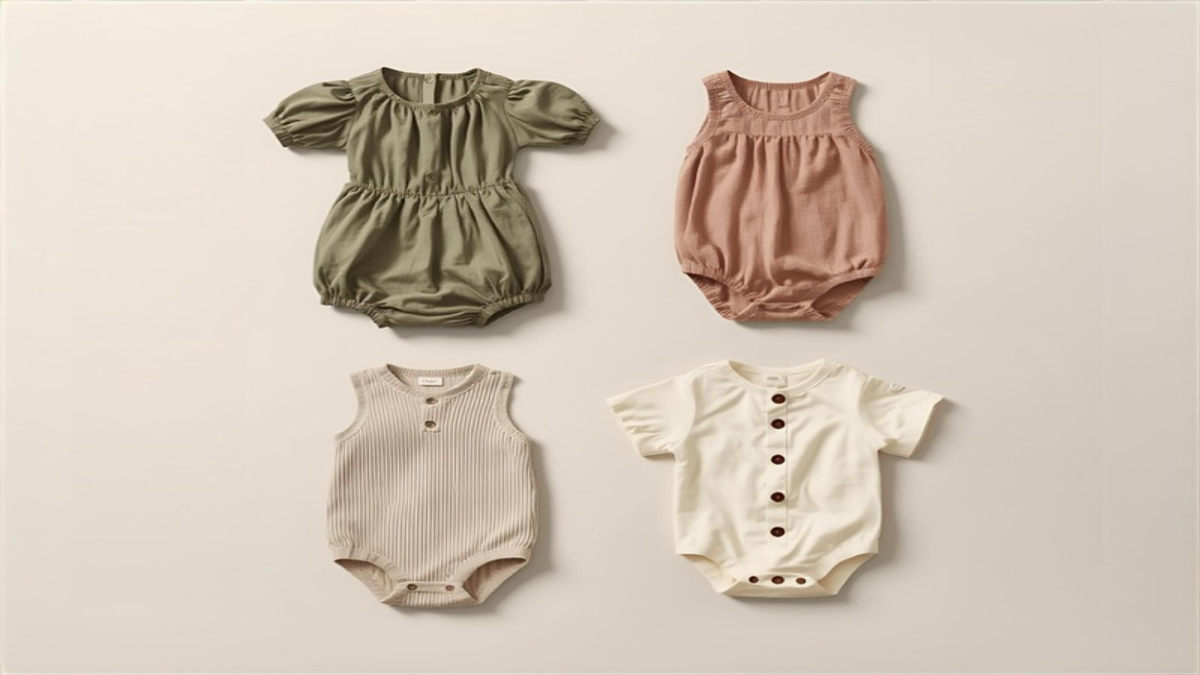
The Complete Guide to Baby Rompers: Types, Sizing, Occasions, and Care
A romper is a one-piece garment that combines a top and shorts or loose pants in a single piece. Unlike a bodysuit (often called a "onesie"), which is designed as a snap-crotch base layer worn under other clothes, a romper is a complete, standalone outfit. For babies who are not yet walking, it is one of the most practical garments in the wardrobe: no shirt riding up, no pants sliding down, and diaper changes that do not require undressing the entire baby.
When my daughter was six months old, I stopped reaching for separates entirely. A good knit romper was all she needed most mornings. One piece, on in thirty seconds, done. She looked put together for family visits and comfortable enough to nap in the car on the way home. That is the romper doing its job.
The terms get used interchangeably and it causes confusion. A bodysuit is a base layer. A romper is an outfit. A footie or sleeper is for sleep. They each have their place, and knowing the difference helps you build a wardrobe that actually works, or choose a gift that gets used.
Key Takeaways
- A romper is a standalone outfit; a bodysuit/onesie is a base layer meant to be worn under clothes.
- Knit cotton rompers are the most versatile: stretchy, soft, work for everyday and casual occasions.
- Woven and ruffle-collar rompers are better suited for milestone photos and dressed-up occasions.
- Snap-crotch rompers make diaper changes easy at any age from newborn onward.
- Machine wash cold, tumble dry low, no fabric softener. Quality cotton holds its shape through 20+ washes.
- For gifts: 3-6M or 6-9M knit rompers are one of the safest, most-used gift choices.
Romper vs. Bodysuit vs. Footie: What's the Difference?
The terminology around baby one-pieces is confusing. "Onesie," "bodysuit," "romper," and "playsuit" are all used inconsistently across brands and parenting forums. Here is a clear breakdown:
| Feature | Romper | Bodysuit / "Onesie" | Footie / Sleeper |
|---|---|---|---|
| Definition | One-piece combining top + shorts or loose pants | Snap-crotch undershirt; base layer worn under pants | Full-body one-piece with enclosed feet; primarily for sleep |
| Primary use | Standalone outfit for daily wear, outings, occasions | Layering piece; worn under pants, skirts, or shorts | Sleep, lounging at home |
| Diaper access | Snap crotch (most styles) | Snap crotch | Full zip or snap front |
| Layering | Can be layered over a bodysuit in cooler months | Designed to be worn under other garments | Not typically layered |
| Best age range | Newborn through 18M | Newborn through 24M | Newborn through 12M (or as pajamas beyond) |
| Key occasions | Everyday, outings, photos, visits, events | Daily base layer; year-round | Bedtime, early morning, lounging |
| Typical fabrics | Knit cotton, woven cotton, linen blends | Knit cotton, interlock, rib knit | Fleece, cotton knit, microfleece |
One note on terminology: "onesie" is technically a registered trademark of Gerber Childrenswear, but it's become the generic term most people use for any snap-crotch bodysuit, similar to how "Kleenex" became synonymous with tissue. The correct generic term is "bodysuit." A romper, by contrast, is unambiguously its own category: it's an outfit, not an undergarment.
Types of Baby Rompers
Not sure what size to buy?
Get our free size guide — the cheat sheet every gift buyer and new parent needs.
Not all rompers are the same. The construction, fabric, and design details determine when a romper is appropriate and how it wears over time.
Knit Cotton Romper
The most versatile type. Knit cotton stretches with the baby, is soft against skin from day one, and moves easily through a full day of crawling, bouncing, and being carried. This is the everyday workhorse. It's also the most forgiving fit: a 3-6M knit romper will fit a baby comfortably across a wider weight range than a structured woven piece. This is the romper style to reach for at home, on errands, at the park, and for casual visits.
Woven Cotton Romper
Structured, with minimal stretch. Woven rompers have a cleaner, dressier look; they hold their shape throughout the day and photograph beautifully. They're better suited for occasions than everyday wear. A woven romper requires more care during diaper changes and can be harder to get on and off, which is why most parents save these for shorter wear windows like a birthday, a family dinner, or a photo session.
Flutter Sleeve Romper
Typically woven or in a mixed fabric. The flutter sleeve adds visual interest and a dressed-up feeling without being fussy. Popular for milestone photos, warm-weather occasions, and family gatherings. Because the sleeves are decorative, not functional, these are mostly seasonal (spring and summer).
Ruffle Collar or Ruffle Trim Romper
One of the dressier options. A ruffle collar elevates an otherwise simple silhouette. It photographs extremely well and looks put together, occasion-ready dressing. These work for holidays, baptisms, birthday parties, and any moment where the outfit should be remembered. They're not typically for daily rotation.
Smocked Romper
A traditional, heirloom-adjacent style. Smocking (the decorative pleating technique across the chest) gives these rompers a timeless, fine-clothing feel. Often seen at formal family occasions, christenings, and milestone photos. These require more careful washing and should not be machine dried on high heat.
Romper Sets (Top + Matching Pants)
Technically these are coordinating sets, not true rompers; the top and bottom are separate pieces designed to be worn together. They offer more flexibility (the top can be worn without the pants; the pants pair with other tops) and are popular for slightly older babies who are crawling and moving in ways that make a true one-piece less practical. Useful to know the distinction when shopping.
| Romper Type | Fabric | Best Occasion | Dressiness |
|---|---|---|---|
| Knit Cotton | Knit cotton, interlock | Everyday, errands, casual visits | Casual |
| Woven Cotton | Woven cotton, poplin | Outings, semi-formal occasions | Smart casual → semi-formal |
| Flutter Sleeve | Woven or mixed | Photos, spring/summer events | Smart casual → dressy |
| Ruffle Collar / Trim | Woven, knit, linen blends | Holidays, milestones, family visits | Dressy |
| Smocked | Woven cotton, lawn cotton | Formal events, christenings, heirloom occasions | Formal |
| Romper Set (coordinating) | Knit cotton, fleece, woven | Everyday, play, outings | Casual → smart casual |
How to Choose the Right Romper
For everyday wear
Go knit cotton with a snap crotch. The stretch accommodates movement through a full day, the snap makes diaper changes quick, and a quality knit romper washes and wears repeatedly without losing its shape. Neutral and warm tones (cream, sage, dusty rose) photograph well and coordinate easily with layers. Our baby rompers collection is built around this everyday-first approach.
For photos and milestone moments
Choose a structured silhouette: flutter sleeve, ruffle collar, or woven cotton. These styles hold their shape in photos and read as intentional. For the color palette, lean into whatever complements the setting; neutral backgrounds work beautifully with warm tones like dusty rose, lavender, and cream. Avoid patterns that compete with the background or the baby's features. The best milestone outfit disappears into the moment; you see the baby, not the clothes.
For gifts
A knit romper in 3-6M or 6-9M is one of the safest baby gifts you can give. It's practical, beautiful, and will actually be worn. Choose a style that works for everyday but photographs well: a romper that looks polished but is not too precious to put on a Tuesday. If you're attending a shower before the birth, a 6-9M knit romper is the ideal size: it'll arrive right when the exhaustion lifts and parents start caring about what the baby is wearing.
For warmer vs. cooler months
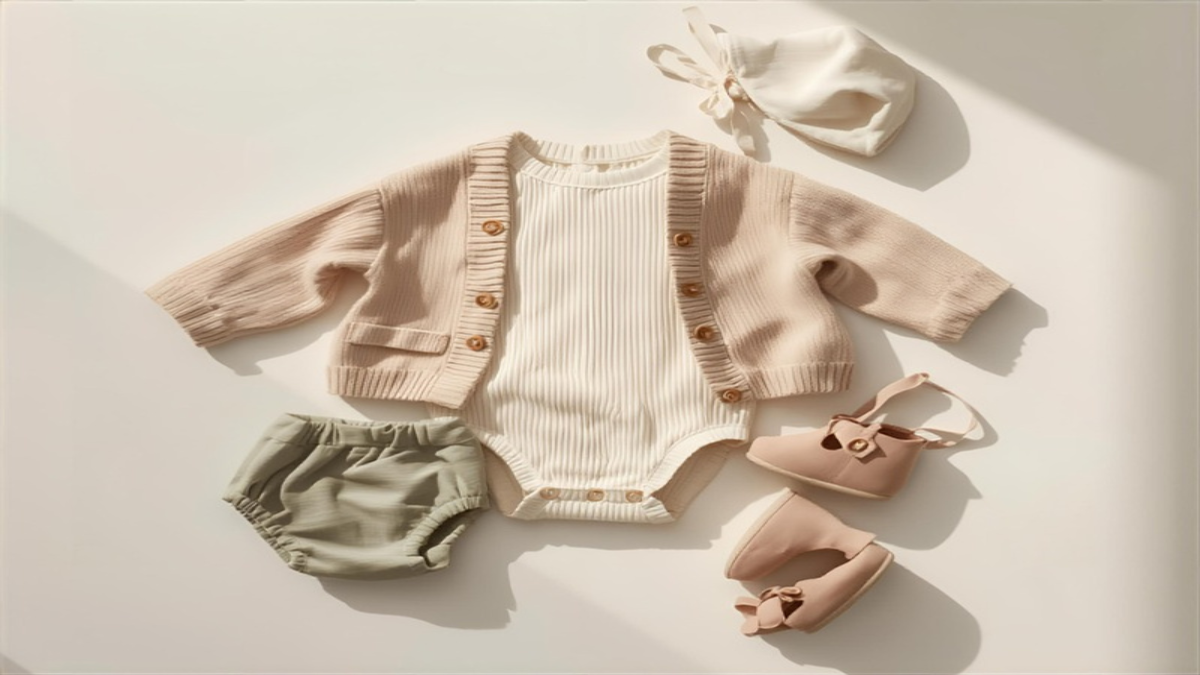
In warm weather, a short-sleeve or sleeveless knit romper worn alone is comfortable and complete. In cooler months, layer a long-sleeve bodysuit underneath the romper; the snap crotch on both pieces makes this combination easy to diaper-change without fully undressing. Add soft-sole shoes or knit booties and the outfit works through a range of temperatures. This is one of the reasons knit rompers have such a long useful season.
Ashmi Rompers
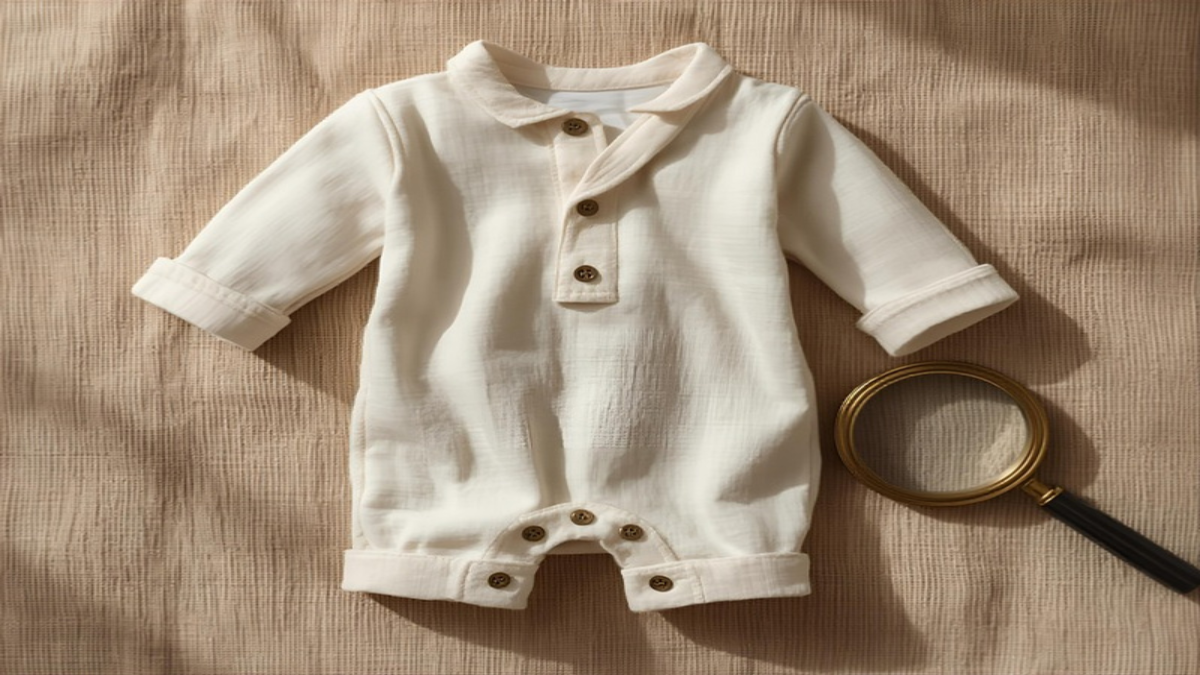
The Winston Knit Cotton Romper is the clearest expression of what a well-made everyday romper should be: structured enough for photos, soft enough for a full day, and constructed to hold up through repeated washing. It's designed in 100% premium cotton knit, with a snap crotch and a clean silhouette that doesn't compete with the baby wearing it.
"Dressed up but comfy... He looked adorable and even napped in it."
Ashmi & Co. customer
That review captures exactly what this romper is designed to do. It moves between occasions without requiring a wardrobe change: worn to a family visit, through a nap, and back out again. That versatility is the point.
Sizing for Ashmi knit rompers: true to size, with a slight natural stretch in the knit construction. If you're between sizes, size up; the stretch accommodates a larger frame without looking loose. The snap crotch adjusts for length, making it forgiving as the baby grows.
Browse the full selection of baby rompers, or explore everyday baby clothes for complete outfit ideas built around the same cotton-first approach. And if you are building a full wardrobe from scratch, our Baby Clothes 101 guide covers how many pieces you actually need per size range.
Care Guide for Cotton Knit Rompers
Quality cotton is durable. A well-made knit romper washed correctly will hold its color, shape, and softness through 20 or more washes, which matters when a baby is generating multiple outfit changes per day. (If you are wondering whether the premium price tag is worth it, our cost-per-wear breakdown does the math.)
Washing instructions
- Machine wash cold on a gentle cycle. Hot water accelerates color fading and can cause knit fabric to shrink or lose its shape.
- Wash inside-out to protect surface texture and any printed or embroidered details.
- Do not use fabric softener. It sounds counterintuitive, but fabric softener coats cotton fibers over time and reduces their natural absorbency and breathability, two properties that matter for a fabric worn directly against baby skin. Good cotton is already soft; it doesn't need softener.
- Use a baby-safe, fragrance-free detergent, especially in the first months when skin is most sensitive.
Drying instructions
- Tumble dry low or hang dry. High heat is the main enemy of knit cotton; it can cause shrinkage and distort the snap-crotch area over repeated cycles.
- Hang drying preserves shape best and extends the life of the garment, but low-heat tumble drying is fine for most knit rompers.
- Reshape while damp if hang drying; this keeps the knit from stretching unevenly as it dries.
"I've washed and tumble dried it many times. Still in good shape."
Ashmi & Co. customer
Stain treatment
Treat stains promptly. The longer a stain sits in cotton, the harder it is to remove. Cold water and a gentle stain remover applied immediately handles most baby-related stains (spit-up, food, diaper incidents). Avoid hot water for stain treatment; it sets protein-based stains into the fiber.
When to Size Up
The general rule for baby clothing: when in doubt, size up. I bought three rompers in my daughter's exact size range and two in the next size up. By month four, the exact-size ones were getting snug and the sized-up ones were in rotation. For rompers specifically, sizing up matters in two ways.
First, knit rompers are more forgiving than woven. A knit piece that's labeled 3-6M will comfortably fit a baby at the upper end of that range, and the snap crotch adjusts for a baby who's longer in the torso. You won't look at a correctly-sized knit romper and think it's too big; the fabric moves with the body rather than reading as oversized.
Second, the snap crotch in most rompers gives you additional flexibility. Even if the torso fits snugly, you can leave the bottom snaps open or fasten only some of them, which effectively extends the romper's useful life by several weeks.
Ashmi's on-site guidance mirrors this: "Between sizes? Size up." For most knit rompers, this is the right call. For the Chase Sweatshirt Jogger Set specifically, which runs large, go one size down from your baby's usual size.
For occasion pieces, especially woven rompers or smocked styles, sizing up is less advisable, because the structure of the garment relies on the correct fit. For these, measure against the brand's size chart and buy for where the baby is now, not where they'll be in a month.
You can also find size guidance for gifting in our baby clothing size guide.
Frequently Asked Questions
What is the difference between a baby romper and a onesie?
A romper is a complete, standalone one-piece outfit that combines a top and shorts or loose pants in a single garment. A onesie (technically a Gerber trademark, now used generically) is a snap-crotch undershirt designed to be worn as a base layer under pants, not as a standalone outfit. A romper is something you'd dress a baby in for photos or an outing; a bodysuit or onesie is what goes underneath. The key practical difference: a romper is an outfit, a bodysuit is a base layer.
When can babies wear rompers?
Babies can wear rompers from birth. Newborn-size rompers exist and work well; they're easy to put on, keep the torso and legs covered, and eliminate the need to coordinate separates. That said, rompers become especially practical from around 2-3 months onward, when babies are more alert and being dressed for outings, family visits, or photos. The snap crotch on most rompers makes diaper changes straightforward at any age. For newborns, look for rompers with envelope necklines or front snaps for easier dressing.
What size baby romper should I buy as a gift?
For a gift, 3-6M or 6-9M is almost always the right call. Newborn and 0-3M rompers are outgrown quickly (often in 4-8 weeks), and parents tend to receive more of the smaller sizes than they can use. A knit romper in 6-9M is a particularly thoughtful gift: it has a longer wear window, it's the size babies wear when they're alert and social, and parents are more likely to put them in a real outfit by that age. If you know the due date or birth month, account for the season the baby will be in that size.
How do you wash cotton baby rompers?
Machine wash cold on a gentle cycle. Tumble dry low or hang dry to preserve the shape and color. Do not use fabric softener; it coats cotton fibers over time and reduces their natural absorbency and softness. Quality cotton knit rompers hold up well to repeated washing. Customers have reported that Ashmi rompers maintain their shape and color through many washes with normal care. Washing inside-out can help preserve any surface texture or print on the fabric.
Are rompers good for newborns?
Yes, rompers work well for newborns, with a few things to look for. Choose rompers with envelope necklines, front snaps, or side-snap openings so you don't have to pull the garment over the baby's head, which can be uncomfortable in the first weeks. A snap crotch is easier for diaper changes than a full-zip footie. Knit cotton rompers are especially good for newborns because the fabric is soft against sensitive skin and stretches gently without restricting movement. Avoid stiff woven rompers for daily newborn wear; save those for occasion use at slightly older ages.
The romper is the piece you reach for on the mornings when you want your baby to look like you thought about it but you only have thirty seconds. It is the outfit that works for a Tuesday at home and a Saturday with grandparents. Good fabric, good snaps, one piece, done.
See the full romper collection, or start with the fabric guide if you want to know exactly what to look for in the cotton.
,%20which%20is%20designed%20as%20a%20snap-crotch%20base%20layer%20wor...)
Leave a comment
This site is protected by hCaptcha and the hCaptcha Privacy Policy and Terms of Service apply.